
 中文简体
中文简体 English
 Français
 Español
 عربى
عربى-

(86)-0571-82550327
-

info@bfseats.com
-


-


Agricultural Machinery Seats Guide: Comfort & Durability
Content
- 1 Rethinking Tractor Seating: What the Seat Is Actually Doing
- 2 Seat Anatomy and How Its Components Work Together
- 3 Seat Design and Adjustment Features
- 4 Mechanical vs. Air Suspension Seats
- 5 Technical Specifications and Key Performance Factors
- 6 What Is a Suitable Farm Tractor Seat for Long-Term Use?
- 7 Key Considerations for a Long-Term Farm Tractor Seat
- 8 Application Scenarios
- 9 Installation and Maintenance Recommendations
- 10 Common Mistakes and Overlooked Considerations
- 11 Conclusion
- 12 Frequently Asked Questions
- 12.1 What is the best farm tractor seat for long-term use?
- 12.2 What features should a good tractor seat include?
- 12.3 How does suspension type affect tractor seat performance?
- 12.4 How often should a tractor seat suspension be checked?
- 12.5 Why does cushion drainage matter on an agricultural seat?
- 12.6 What should be confirmed before replacing a tractor seat?
Agricultural machinery seats are seating systems engineered for tractors, combines, and other off-road equipment, designed to manage prolonged sitting time, uneven terrain vibration, and repeated entry and exit throughout a working day. Unlike general automotive seating, these seats are built around suspension and adjustment systems that respond directly to the operating conditions of farm equipment.
Rethinking Tractor Seating: What the Seat Is Actually Doing
A tractor seat is easy to overlook until discomfort or fatigue makes it noticeable, often only after hours of continuous operation. The seat's job extends beyond providing a place to sit: it absorbs vibration transmitted from the cab floor, supports the operator's spine through long stationary periods, and allows enough adjustment range to accommodate different operators using the same machine. When any of these functions falls short, the effects tend to accumulate gradually rather than appear immediately, which is part of why seat condition is frequently addressed only after it becomes a noticeable problem.
Seat Anatomy and How Its Components Work Together
Simplified seat structure: backrest, lumbar zone, cushion, and suspension base each address a different part of long-duration operator comfort.
The backrest manages upper body support and posture over time, the lumbar zone maintains the natural curve of the lower spine, the cushion distributes weight and manages moisture from perspiration, and the suspension base isolates the operator from vibration and shock transmitted through the machine's frame. Each component can be evaluated somewhat independently, but seat performance depends on how well they work together as a system.
Seat Design and Adjustment Features
Back Angle Adjustment
Allows the backrest recline angle to be set according to operator preference and the task being performed, reducing strain during long stretches of forward-facing operation.
Lumbar Adjustment
Provides adjustable support at the lower back to maintain spinal alignment, which becomes more relevant the longer an operator remains seated.
Cushion Drainage
Channels or perforations in the cushion allow moisture from rain, cleaning, or perspiration to drain rather than remain trapped against the operator.
Suspension System
Mechanical or air-based components that absorb vibration and shock from uneven terrain before it reaches the operator's body.
Mechanical vs. Air Suspension Seats
| Factor | Mechanical Suspension | Air Suspension |
| Vibration absorption | Moderate, spring-based damping | Generally smoother across varied terrain conditions |
| Adjustability | Weight and height adjustment via mechanical settings | Weight and ride height adjustment via air pressure control |
| Maintenance needs | Periodic inspection of springs and dampers | Requires monitoring of air system components and seals |
| Typical application | Standard tractors and general equipment | Equipment operating on rougher or more variable terrain |
Technical Specifications and Key Performance Factors
| Specification | Typical Range or Consideration |
| Suspension travel | Varies by suspension type and intended terrain severity |
| Weight adjustment range | Adjustable to match different operator body weights for consistent suspension response |
| Backrest adjustment range | Multiple recline positions to suit different operating postures |
| Cushion material | Foam density and covering material affect both comfort and durability |
| Mounting interface | Bracket and bolt pattern must match the specific equipment cab floor |
| Weather resistance | Covering material and drainage design affect performance in open-cab conditions |
What Is a Suitable Farm Tractor Seat for Long-Term Use?
A seat intended for extended daily use generally needs a broader adjustment range and more effective vibration isolation than one used only occasionally. For long-term use, the combination of a responsive suspension system, adequate lumbar support, and a cushion designed to manage moisture over repeated use tends to matter more than any single feature in isolation. An agricultural machinery seat intended for continuous daily operation should also allow adjustment across the range of operators likely to use the same machine.
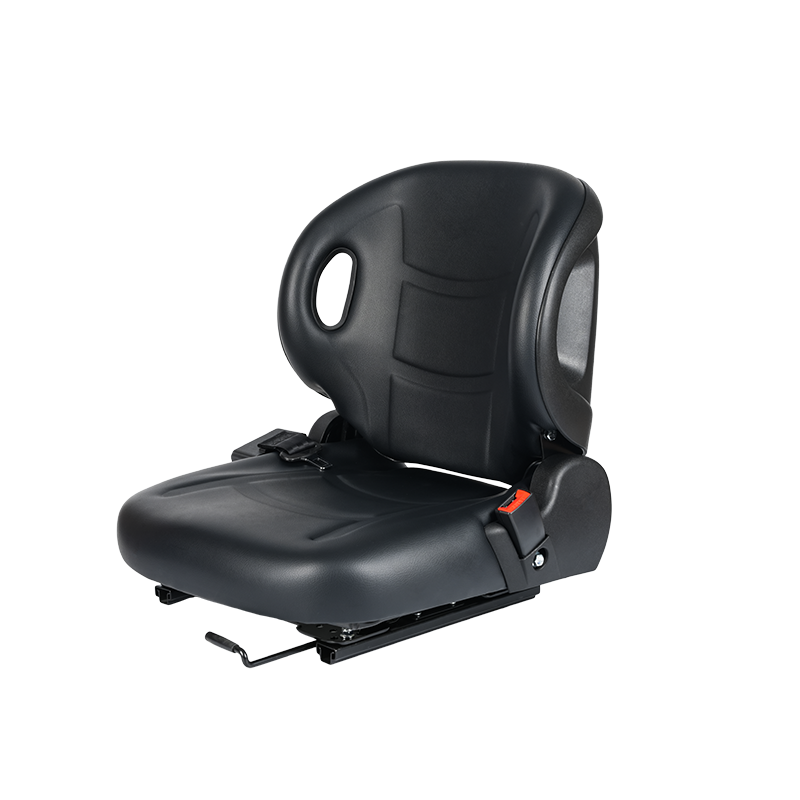
Key Considerations for a Long-Term Farm Tractor Seat
- Suspension responsiveness: The suspension should respond to actual terrain conditions rather than bottoming out or remaining overly firm across varied surfaces.
- Weight-matched calibration: Suspension performance depends on being calibrated to the operator's actual weight, not left at a default setting.
- Adjustability range: Back angle and lumbar adjustments should cover a range wide enough to suit multiple operators if the machine is shared.
- Cushion material durability: Foam that compresses unevenly over time reduces both comfort and support consistency.
- Compatibility with the equipment's mounting interface: Bracket and bolt pattern compatibility should be confirmed before ordering a replacement seat.
Application Scenarios
- Row crop and utility tractors: Seats used through extended daily field operation across multiple growing seasons.
- Combine harvesters: Seating that must accommodate long harvest-season shifts with sustained vibration exposure.
- Forestry and forage equipment: Seats operating on more variable terrain, where suspension performance is more heavily tested.
- Telehandlers and loaders: Seating used during repeated entry, exit, and directional changes throughout a shift.
Installation and Maintenance Recommendations
When installing a replacement seat, confirming that the mounting bracket aligns with the existing bolt pattern avoids the need for aftermarket adapters that can affect suspension performance. Suspension weight settings should be recalibrated to the current operator after installation rather than left at a factory default. Ongoing maintenance should include periodic checks of suspension components for smooth travel, inspection of cushion covering for tears or wear, and cleaning of drainage channels to prevent buildup that could trap moisture against the cushion.
Common Mistakes and Overlooked Considerations
- Leaving suspension uncalibrated: A suspension system set for the wrong operator weight will not isolate vibration effectively.
- Ignoring mounting compatibility: Installing a seat with a mismatched bolt pattern can compromise stability and suspension alignment.
- Overlooking cushion drainage maintenance: Blocked drainage channels can allow moisture to remain trapped against the cushion, accelerating wear.
- Replacing only the cushion instead of evaluating the full seat: Suspension and backrest components also degrade over time and may need attention alongside the cushion.
Conclusion
Selecting and maintaining agricultural machinery seats involves more than choosing a comfortable cushion. Suspension calibration, adjustment range, mounting compatibility, and drainage design all contribute to how well a seat performs across long working hours and variable field conditions. Addressing these factors together supports more consistent operator comfort over the equipment's service life.
Frequently Asked Questions
What is the best farm tractor seat for long-term use?
A seat with a responsive, weight-calibrated suspension, adjustable lumbar support, and a durable cushion with effective drainage tends to perform best across extended daily use.
What features should a good tractor seat include?
Back angle adjustment, lumbar adjustment, cushion drainage, and a suspension system are commonly considered core features for sustained comfort and support.
How does suspension type affect tractor seat performance?
Mechanical suspension provides spring-based damping suited to standard conditions, while air suspension generally offers smoother performance across more variable terrain.
How often should a tractor seat suspension be checked?
Suspension components should be inspected periodically for smooth travel and recalibrated whenever the primary operator or typical load changes.
Why does cushion drainage matter on an agricultural seat?
Drainage channels allow moisture from rain, cleaning, or perspiration to escape rather than remain trapped against the cushion, which helps preserve foam condition over time.
What should be confirmed before replacing a tractor seat?
Mounting bracket compatibility and bolt pattern should be confirmed against the existing cab floor before ordering a replacement seat.
Droits d'auteur ©Hangzhou Benfeng Auto Seat Co., Ltd. Tous droits réservés Confidentialité Fabricants de sièges industriels ergonomiques (OEM/ODM)
浙ICP备20022099号